
Blog
Ivy Leaf Extract for Cough: How It Works

Ivy leaf (Hedera helix) extract has been a go-to, non-antibiotic cough remedy across Europe for decades. Unlike many herbal remedies, it actually has a reasonably solid body of clinical research behind it. Here’s what that research actually shows.
How It’s Thought to Work
Ivy leaf contains saponins, plant compounds believed to have mucolytic, spasmolytic, and mild anti-inflammatory properties. In plain terms: mucolytic means it may help thin mucus, and spasmolytic means it may help relax tightened airway muscles. Laboratory research also points to bronchodilating activity, which may help ease breathing during a cough tied to a chest cold.
What the Research Actually Shows
An updated systematic review covering six randomized controlled trials found something reassuring. Every included study concluded ivy leaf extract is safe for cough linked to upper respiratory infections and bronchitis. Three of the six trials also reported a faster reduction in cough severity or frequency compared to placebo or standard care.
That said, honesty matters here. The same review noted something important: the clinical significance of these effects appears minimal. Study quality across the field also remains inconsistent, with small sample sizes and methodological limitations showing up repeatedly. Ivy leaf isn’t a miracle cure. Think of it as a modestly effective, well-tolerated option worth trying alongside other cough management strategies, not a guaranteed fix.
Where the Safety Data Gets Genuinely Strong
A large postmarketing safety study tracked 9,657 patients using ivy leaf extract in real-world clinical practice, not just a controlled trial setting. The overall rate of adverse events came in at just 2.1%. Mild gastrointestinal upset was the most common issue reported. That’s a large enough sample to give real confidence in ivy leaf’s safety profile, even if its effectiveness data stays more modest.
A separate systematic review published in Evidence-Based Complementary and Alternative Medicine reached a similar conclusion. Researchers reviewed more than 17,000 treated subjects across multiple studies. No severe adverse events turned up in that entire pooled group. The review’s authors called this considerable evidence for ivy leaf’s safety.
Ivy Alone vs. Ivy Combined With Thyme
Some research points to combination formulas performing better than ivy leaf alone. One placebo-controlled trial tested an ivy-and-thyme combination in 360 participants. It found statistically significant improvement in both the frequency and duration of cough compared to placebo. This is part of why many commercial cough syrups pair ivy leaf with thyme rather than using ivy on its own.
What Are Saponins, Exactly?
Saponins are naturally occurring plant compounds found in many herbs, not just ivy. They get their name from their soap-like ability to form a foam in water. In ivy leaf, alpha-hederin is the primary saponin researchers point to for its effects on the airways. Lab studies suggest it may increase beta-2 receptor activity in the lungs, a pathway also targeted by common asthma inhalers, though the clinical significance of this mechanism in humans still needs more research.
Dry Cough vs. Productive Cough
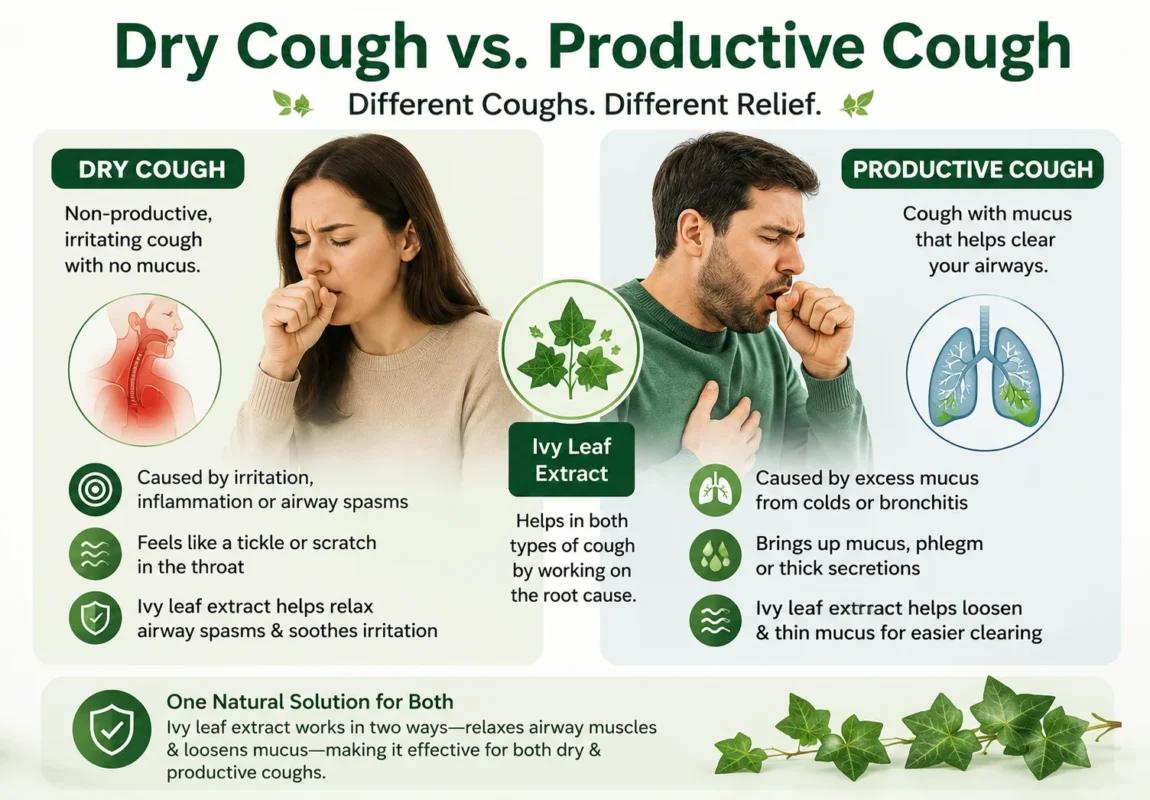
Ivy leaf extract gets studied for both dry, irritating coughs and productive coughs that bring up mucus. Its mucolytic properties are thought to help loosen and thin mucus in a productive cough. Its spasmolytic effects may calm the muscle spasms behind a dry, hacking cough instead. This dual action is part of why manufacturers market it as a general-purpose cough remedy rather than one designed for a single cough type.
How It Compares to Standard Cough Suppressants
Common over-the-counter cough suppressants like dextromethorphan work by blocking the brain’s cough reflex directly. Ivy leaf extract works differently. It targets the airways themselves rather than suppressing the reflex. Neither approach wins universally. Suppressants can offer faster symptom relief for a disruptive dry cough. Ivy leaf’s gentler mechanism appeals to people who prefer to avoid stronger suppressants, especially for children.
Who Might Consider It
- Adults and children with a cough from a cold or mild bronchitis, especially those who want to avoid stronger cough suppressants
- Anyone who wants a sugar-free option, since many ivy leaf formulations skip added sugar
- People looking for a non-antibiotic option for a viral respiratory infection, where antibiotics wouldn’t help anyway
Dosage Basics
Most commercial ivy leaf syrups follow age-based dosing, with lower amounts for children and higher amounts for adults. Standardized extracts like EA 575, used in many of the trials cited above, generally follow manufacturer guidance based on body weight and age rather than a one-size-fits-all dose. Always follow the specific product label rather than assuming dosing is identical across brands, since concentration varies.
Who Should Be Cautious
- Young children — check product labeling carefully, since dosing varies by age and some formulations aren’t suitable for infants
- Pregnant or breastfeeding individuals — limited safety data exists for this specific group, so a doctor’s input is worthwhile first
- Anyone with a known allergy to plants in the Araliaceae family, which includes ivy
How Bravo Pharma’s Herix Fits In
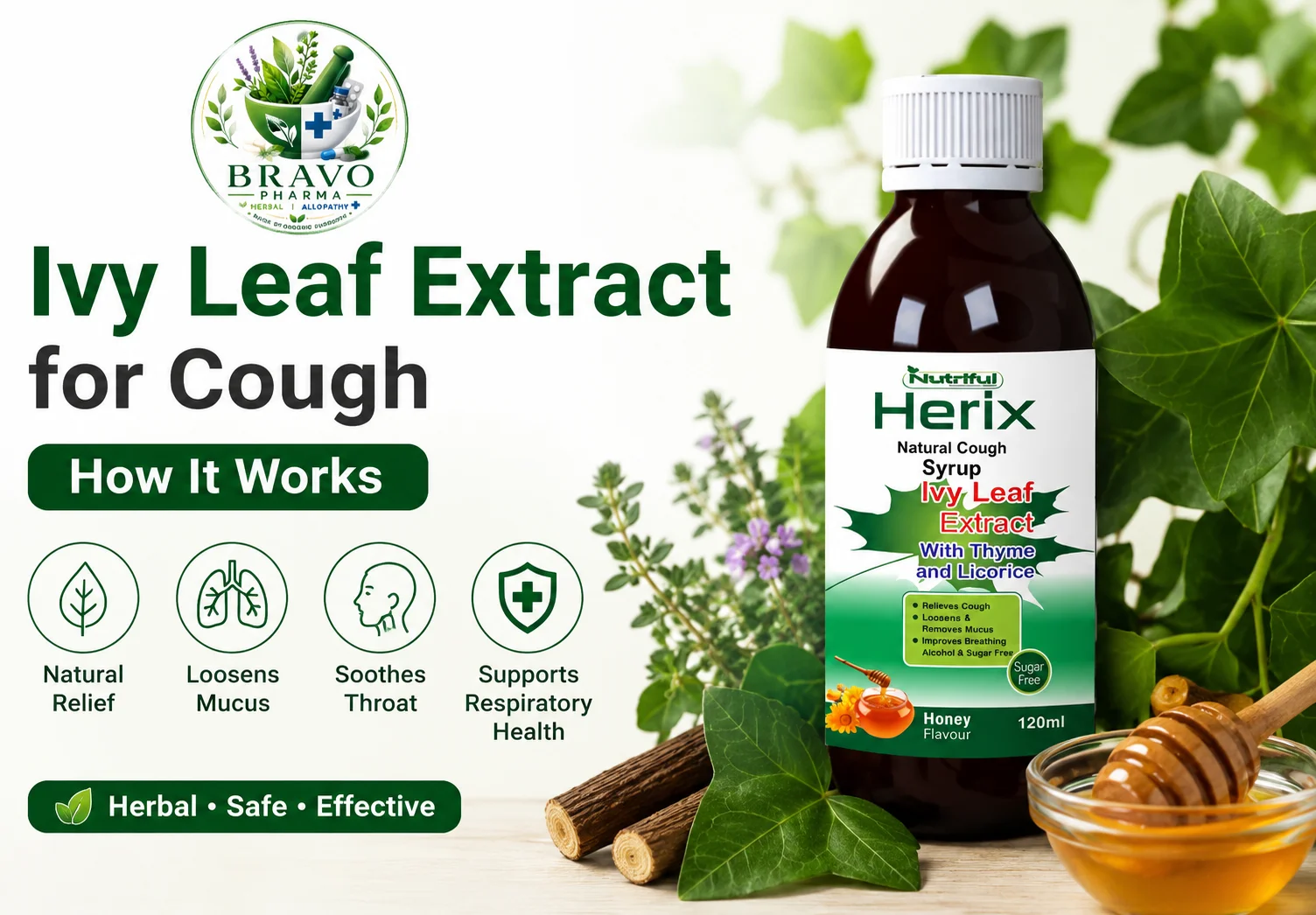
Bravo Pharma’s Herix herbal cough syrup combines ivy leaf with thyme and licorice. This echoes the combination approach that outperformed ivy leaf alone in clinical research. The formulation targets both cough frequency and the general throat irritation that often comes along with a chest cold.
When a Cough Needs More Than a Home Remedy
- A cough lasting more than 2-3 weeks without improvement
- Cough accompanied by high fever, chest pain, or difficulty breathing
- Coughing up blood or unusually thick, discolored mucus
- A cough in a child under 2, where any over-the-counter remedy needs a doctor’s guidance first
A persistent cough can point to something that needs proper diagnosis. Symptom relief alone won’t address the underlying cause. Don’t rely on any over-the-counter remedy, herbal or otherwise, if your cough falls into one of these categories.
A Related Note on Managing Multiple Symptoms
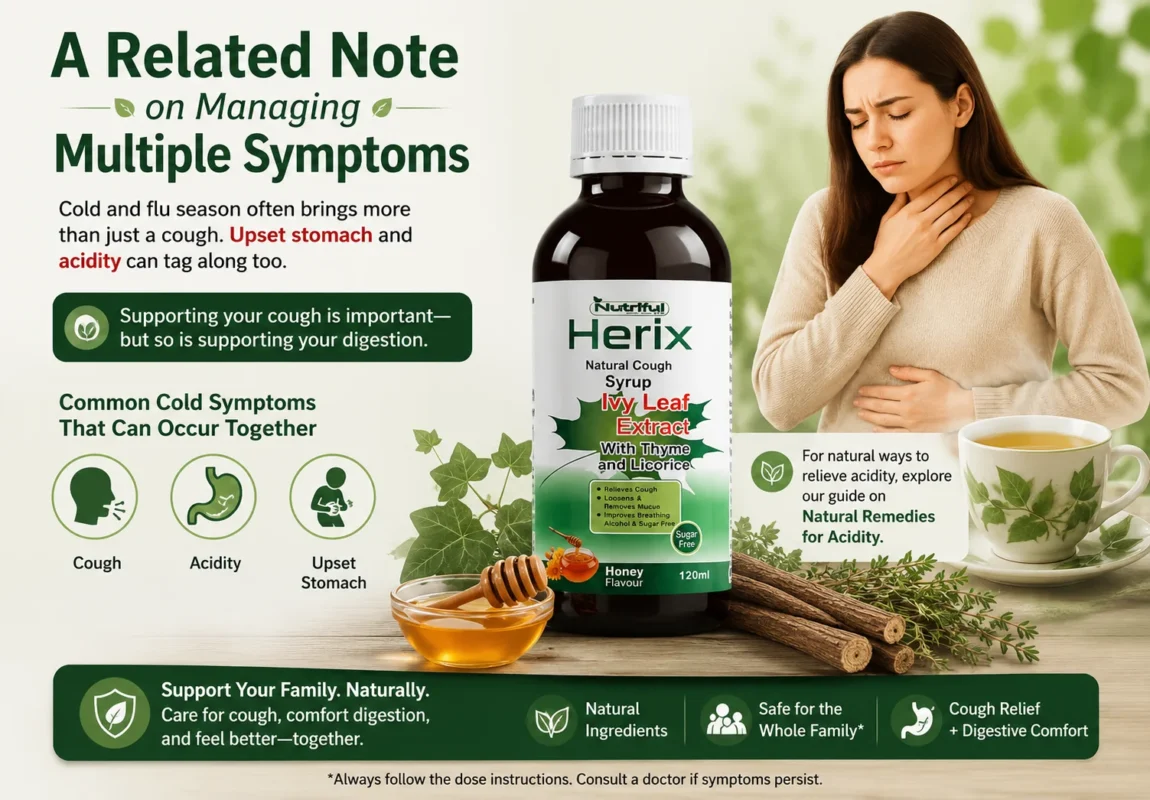
Cold and flu season often brings more than just a cough. Upset stomach and acidity can tag along too, especially with changes in appetite or medication use. If that’s part of what you’re dealing with, our guide on natural remedies for acidity covers simple steps that pair well alongside cough management.
Common Myths About Ivy Leaf Extract
- “It’s an antibiotic alternative” — not accurate. Ivy leaf targets cough symptoms, not the bacteria or viruses causing an infection. It won’t treat a bacterial infection the way an actual antibiotic would.
- “Herbal means it works instantly” — not true here. Clinical trials measured improvement over several days of use, not within hours of the first dose.
- “More servings speed up recovery” — not supported by the research. Stick to the labeled dose rather than assuming extra servings will clear a cough faster.
The Takeaway
Ivy leaf extract won’t work miracles, but the safety data behind it is genuinely reassuring, backed by tens of thousands of treated patients across multiple studies. Combined with thyme, as in most commercial formulas, it offers a gentle, non-antibiotic option for managing an everyday cough. Reach for a doctor’s advice instead of a home remedy if your cough drags on past two or three weeks, or comes with fever, chest pain, or breathing trouble.
Quick FAQ
How fast does ivy leaf extract work?
Most clinical trials measured improvement over several days of consistent use, not immediately after the first dose. Give it a few days before judging results.
Is ivy leaf extract safe for daily long-term use?
Research mostly covers short courses tied to acute cough, generally one to two weeks. It isn’t intended as a long-term daily supplement.
Can I take ivy leaf extract with other cough medications?
Check with a pharmacist first, especially if you’re combining it with a cough suppressant or expectorant, to avoid unintentionally doubling up on similar effects.
This article is for general information only. Children under a certain age, pregnant or breastfeeding individuals, and anyone with a persistent or severe cough should consult a doctor or pharmacist before use.
