
Blog
Iron Bisglycinate vs. Ferrous Sulfate: Which Iron Supplement Is Gentler on Your Stomach?

Iron deficiency is one of the most common nutritional deficiencies worldwide. It affects people of all ages, but women, pregnant individuals, children, and people with certain medical conditions face a higher risk. While iron supplements can effectively restore healthy iron levels, many people stop taking them because of unpleasant digestive side effects.
If you’ve ever experienced constipation, nausea, stomach pain, or bloating after taking an iron supplement, you’re not alone. Fortunately, not all forms of iron affect the digestive system in the same way. Two of the most commonly used forms are Iron Bisglycinate and Ferrous Sulfate. Understanding the differences between them can help you choose the option that best suits your needs.
What Is Iron Deficiency?
Iron is an essential mineral that helps your body produce hemoglobin, a protein in red blood cells responsible for carrying oxygen throughout the body. Without enough iron, your body cannot make sufficient healthy red blood cells, leading to iron deficiency anemia.
Low iron levels may develop gradually, and symptoms often appear only after the deficiency becomes more severe.
Common symptoms include:
- Persistent fatigue
- Weakness
- Shortness of breath
- Pale skin
- Frequent headaches
- Difficulty concentrating
- Cold hands and feet
- Dizziness
Because these symptoms can have many causes, it’s important to consult a healthcare professional for proper testing before starting iron supplements.
Why Do Iron Supplements Cause Stomach Upset?
Although iron supplements help correct iron deficiency, they can also irritate the digestive tract. Many people experience side effects because some forms of iron remain unabsorbed in the intestines, where they may cause irritation.
Common digestive side effects include:
- Constipation
- Nausea
- Stomach cramps
- Bloating
- Heartburn
- Abdominal discomfort
As a result, many people discontinue treatment before their iron levels return to normal.
What Is Ferrous Sulfate?
Ferrous Sulfate is one of the oldest and most commonly prescribed iron supplements. It is widely available and generally costs less than many newer iron formulations.
Healthcare professionals often recommend Ferrous Sulfate because it effectively increases iron levels when taken consistently.
However, despite its effectiveness, digestive discomfort remains one of its biggest drawbacks.
Benefits of Ferrous Sulfate
- Affordable
- Widely available
- Clinically established
- Effective for treating iron deficiency
Possible Drawbacks
- Higher risk of constipation
- May cause nausea
- Can irritate the stomach
- Food and beverages may reduce absorption
What Is Iron Bisglycinate?
Iron Bisglycinate is a chelated form of iron in which the iron molecule binds to the amino acid glycine. This unique structure protects the iron during digestion and helps the body absorb it more efficiently.
Because of this improved absorption, many people experience fewer digestive side effects compared with traditional iron salts.
Furthermore, Iron Bisglycinate often provides similar benefits with lower elemental iron doses.
Iron Bisglycinate vs. Ferrous Sulfate
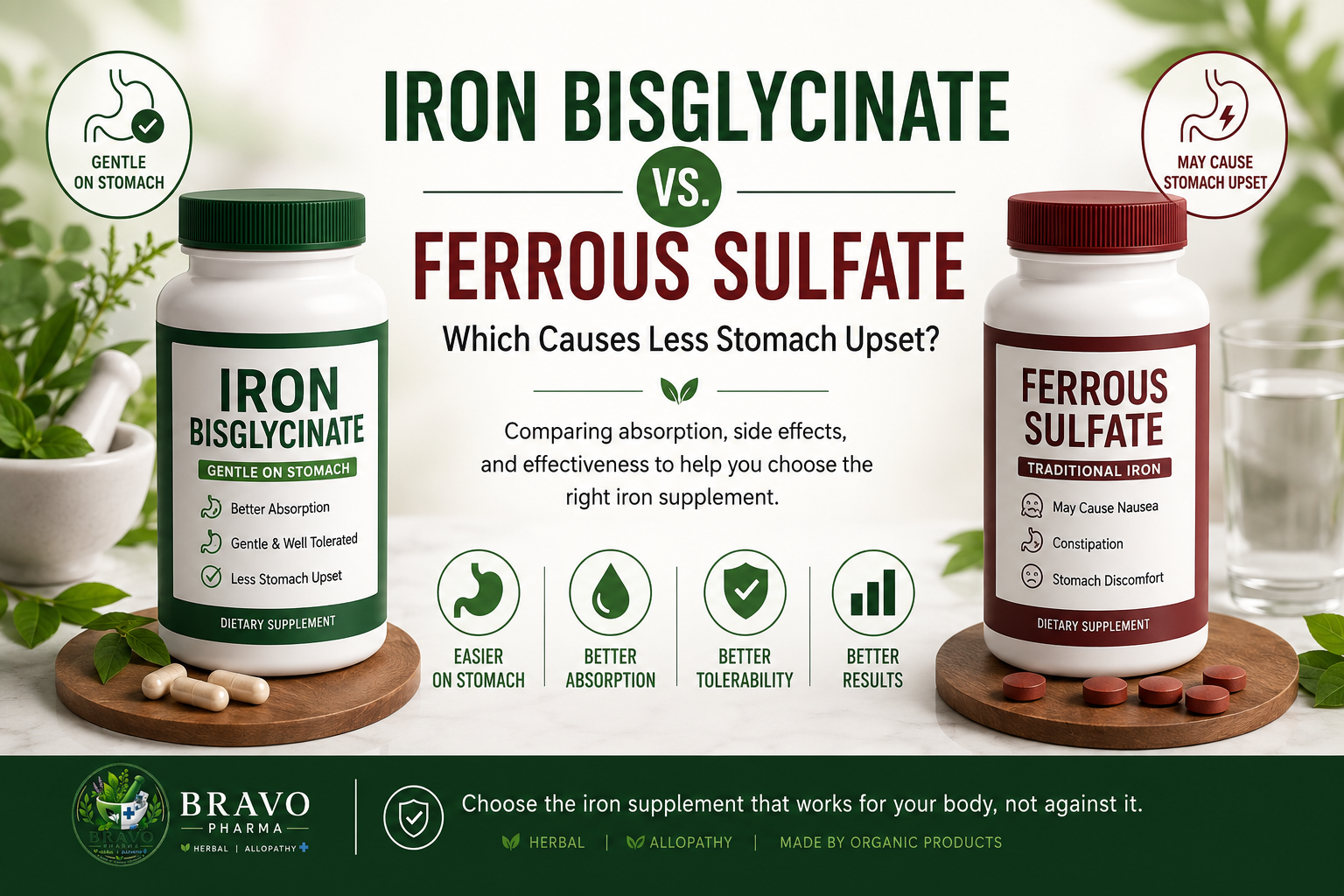
The table below highlights the main differences between these two iron supplements.
| Feature | Iron Bisglycinate | Ferrous Sulfate |
| Absorption | High | Moderate |
| Stomach Comfort | Better tolerated | More stomach irritation |
| Constipation Risk | Lower | Higher |
| Nausea | Less common | More common |
| Food Interactions | Fewer | More frequent |
| Cost | Higher | Lower |
Overall, Iron Bisglycinate offers better digestive comfort, while Ferrous Sulfate remains the more economical choice.
Why Is Iron Bisglycinate Easier on the Stomach?
The key difference lies in how each form is absorbed.
Ferrous Sulfate depends heavily on stomach acid for absorption. When absorption is incomplete, excess iron may remain in the digestive tract, where it can contribute to constipation, nausea, and irritation.
In contrast, Iron Bisglycinate is bound to glycine, allowing it to use additional absorption pathways. Consequently, less unabsorbed iron remains in the intestines, which may reduce digestive discomfort.
This improved tolerability often makes it easier for people to continue taking their supplements consistently.
Who May Benefit Most from Iron Bisglycinate?
Although both forms can help correct iron deficiency, Iron Bisglycinate may be particularly suitable for:
- Women with heavy menstrual bleeding
- Pregnant women (under medical supervision)
- Vegetarians and vegans
- Older adults
- Individuals with sensitive stomachs
- People who previously stopped iron supplements due to side effects
If digestive discomfort has prevented you from completing iron therapy in the past, discussing Iron Bisglycinate with your healthcare provider may be worthwhile.
Factors That Affect Iron Absorption
Regardless of the type of iron supplement you choose, several factors influence how well your body absorbs iron.
Foods That May Reduce Absorption
Certain foods and beverages can decrease iron absorption, including:
- Tea
- Coffee
- Milk and dairy products
- Calcium supplements
- High-fiber cereals
- Whole grains rich in phytates
Therefore, many healthcare professionals recommend taking iron supplements separately from these foods whenever possible.
Vitamin C Can Help
Vitamin C may improve iron absorption. Pairing your supplement with citrus fruits, orange juice, strawberries, or tomatoes can help your body absorb iron more effectively.
Tips for Taking Iron Supplements
To improve both absorption and comfort:
- Follow your healthcare provider’s instructions.
- Take iron at the same time each day.
- Avoid tea, coffee, and calcium close to your dose.
- Drink plenty of water.
- Eat a balanced diet rich in iron-containing foods.
- If stomach discomfort occurs, ask your healthcare provider whether taking the supplement with a small meal is appropriate.
Consistency is often more important than taking very high doses.
Iron-Rich Foods to Include in Your Diet
Supplements work best when combined with healthy eating habits.
Good dietary sources of iron include:
Animal Sources
- Lean red meat
- Chicken
- Liver
- Fish
- Eggs
Plant Sources
- Lentils
- Beans
- Spinach
- Chickpeas
- Tofu
- Pumpkin seeds
- Iron-fortified cereals
Combining plant-based iron sources with Vitamin C-rich foods may further improve absorption.
How Long Does It Take to Improve Iron Levels?
Iron supplements do not produce immediate results.
Many people begin noticing improvements in energy within a few weeks. However, rebuilding the body’s iron stores usually takes several months.
Even after symptoms improve, healthcare professionals often recommend continuing supplementation until blood tests confirm that iron stores have returned to normal.
Stopping treatment too early may increase the risk of deficiency returning.
When Should You See a Doctor?
Although iron supplements are widely available, they are not suitable for everyone.
Consult your healthcare provider if you:
- Experience persistent fatigue
- Have heavy menstrual bleeding
- Notice blood in your stool
- Have unexplained weight loss
- Have digestive disorders
- Are pregnant
- Have chronic kidney disease
- Take thyroid medication or certain antibiotics
A simple blood test can determine whether you actually have iron deficiency and identify the most appropriate treatment.
Common Myths About Iron Supplements
Myth 1: More Iron Is Better
Taking more iron than recommended does not improve results faster. Excess iron can become harmful and should only be taken under medical supervision.
Myth 2: All Iron Supplements Cause Constipation
Not necessarily. Different forms of iron have different tolerability profiles, and many people find Iron Bisglycinate easier on the digestive system.
Myth 3: Diet Alone Can Always Correct Iron Deficiency
While a healthy diet is essential, moderate or severe iron deficiency often requires supplementation alongside dietary improvements.
Which Iron Supplement Should You Choose?
Both Iron Bisglycinate and Ferrous Sulfate effectively increase iron levels when taken correctly. However, the best choice depends on your individual needs.
Ferrous Sulfate remains a reliable and affordable option for many people. On the other hand, Iron Bisglycinate offers improved absorption and better digestive comfort, making it a suitable choice for individuals who experience constipation or stomach upset with traditional iron supplements.
Ultimately, your healthcare provider can recommend the most appropriate option based on your medical history, symptoms, and laboratory results.
Frequently Asked Questions
Does Iron Bisglycinate cause less constipation?
Many people report fewer digestive side effects with Iron Bisglycinate compared with Ferrous Sulfate because it is generally absorbed more efficiently.
Can I take iron every day?
Take iron supplements exactly as directed by your healthcare provider or according to the product instructions.
Should I take iron with food?
Iron absorbs best on an empty stomach. However, if it causes stomach discomfort, your healthcare provider may recommend taking it with a light meal.
Can coffee reduce iron absorption?
Yes. Coffee and tea can reduce iron absorption. It is generally advisable to avoid them close to the time you take your supplement.
How can I improve iron absorption naturally?
Pair iron-rich foods or supplements with Vitamin C-rich foods and avoid calcium, tea, or coffee around your dose.
Final Thoughts
Choosing the right iron supplement can make a significant difference in both comfort and consistency. While Ferrous Sulfate remains a widely used and affordable option, Iron Bisglycinate is often better tolerated and may cause fewer digestive side effects, such as constipation and nausea.
Regardless of which form you choose, the most important step is confirming iron deficiency through appropriate medical testing. Combined with a balanced diet, healthy lifestyle, and professional guidance, the right iron supplement can help restore healthy iron levels and support your overall well-being.
Disclaimer: This article is for educational purposes only and should not replace professional medical advice. Always consult your healthcare provider before starting, stopping, or changing any iron supplement, especially if you are pregnant, have a chronic medical condition, or take prescription medications.