
Blog
Green Coffee and Garcinia Cambogia for Weight Loss: What the Evidence Says

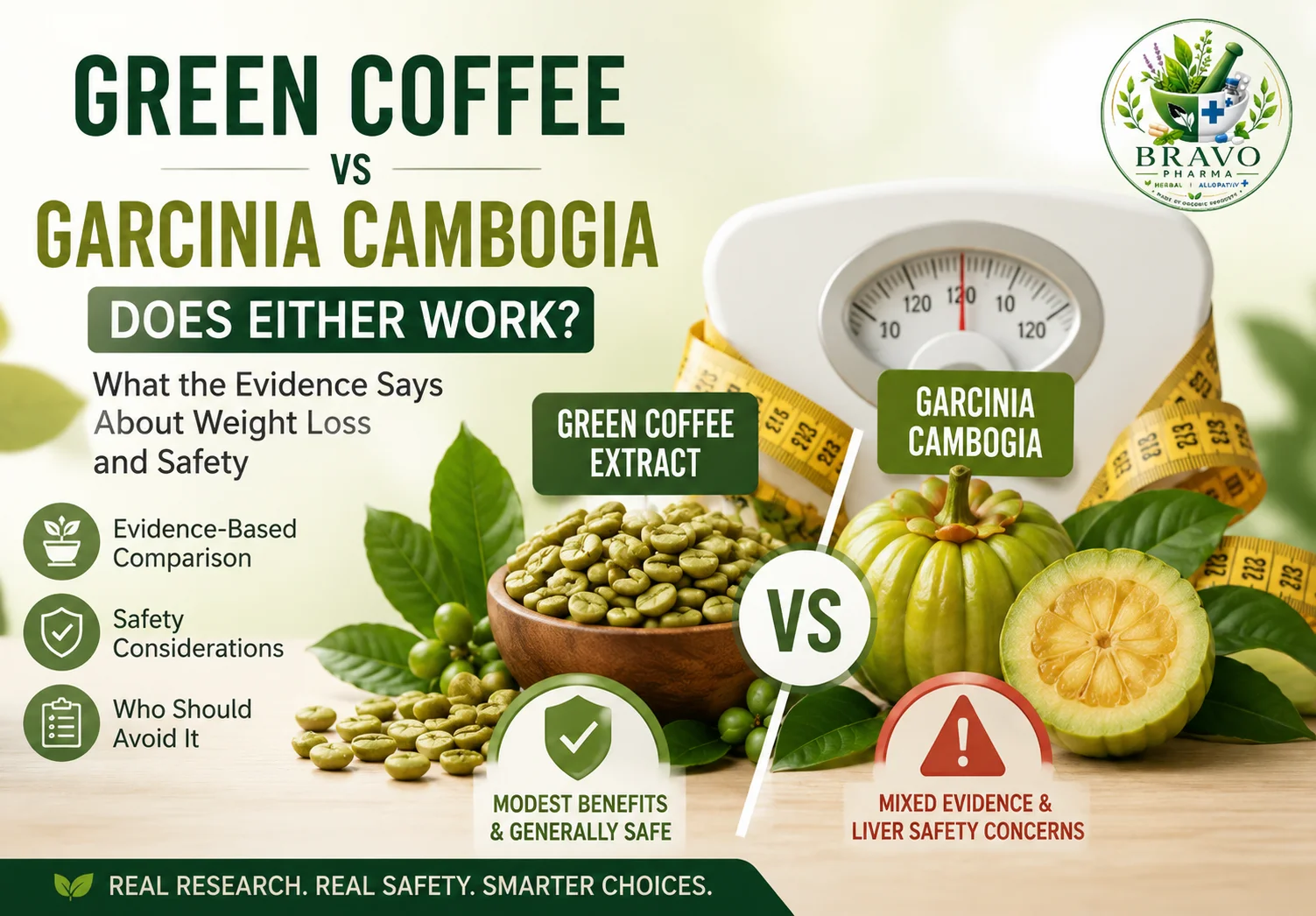
Green coffee bean extract and Garcinia cambogia rank among the most heavily marketed weight-management ingredients. They’re also two of the most misunderstood. Here’s an honest look at what current research actually supports — and where real caution matters.
Why These Two Get Grouped Together
Both ingredients come from plants. Both promise fat reduction without diet or exercise changes. And both have built large followings based more on marketing than on strong clinical evidence. But their safety profiles differ sharply. That difference matters more than most product labels let on.
Green Coffee Bean Extract: What It Actually Is
Green coffee beans are simply unroasted coffee beans. Roasting destroys much of a compound called chlorogenic acid (CGA), so manufacturers extract it from green, unroasted beans instead. Researchers believe CGA influences glucose metabolism and fat absorption. That mechanism forms the basis for its weight-loss marketing.
What the Research Shows About Green Coffee Extract
A systematic review and meta-analysis of randomized controlled trials found that green coffee extract lowered body weight in study participants. Researchers used doses around 500mg per day of chlorogenic acid. The effect size was modest — a few kilograms over several weeks — not a dramatic transformation. Researchers also noted the studies reviewed came with real limitations: small sample sizes and short study durations. Still, the review’s authors called green coffee extract generally safe. They reported anti-inflammatory and antioxidant properties alongside the weight-loss effect.
Garcinia Cambogia: A More Cautious Picture
Garcinia cambogia comes from a fruit native to South and Southeast Asia. Its active compound, hydroxycitric acid (HCA), is thought to inhibit an enzyme involved in fat storage. That mechanism sounds promising on paper. The real-world evidence tells a messier story.
What NIH Says About Garcinia’s Effectiveness
According to the National Center for Complementary and Integrative Health, it remains genuinely unclear whether garcinia cambogia helps with weight loss. Some studies show a modest effect. Others show none at all. NCCIH states plainly that this area needs more research before anyone can draw firm conclusions either way.
The Liver Safety Concern You Shouldn’t Skip
This is where garcinia cambogia diverges sharply from green coffee extract. NCCIH also notes that numerous reports of liver toxicity have emerged in people taking garcinia cambogia products — including multi-ingredient formulas that simply contain it as one ingredient among several. A detailed case review in the NCBI LiverTox database documents that Garcinia-labeled weight-loss products can cause clinically apparent acute liver injury. This injury can turn severe and, in rare instances, fatal. Most cases resolve within one to three months after the person stops the product. But the pattern is well-documented enough that it deserves real weight in your decision, not a footnote.
Warning Signs to Watch For
- Yellowing of the skin or eyes (jaundice)
- Unusually dark urine
- Persistent nausea or vomiting
- Significant abdominal pain, particularly in the upper right side
Stop taking any garcinia-containing product immediately if you notice these symptoms. Seek medical attention promptly, since liver injury can progress quickly if it isn’t caught early.
Who Should Avoid Garcinia Cambogia Altogether
- Anyone with existing liver disease or a history of liver problems
- Pregnant or breastfeeding women
- Anyone taking SSRIs or SNRIs for depression or anxiety, since garcinia interacts with these medication classes
- Anyone on other medications that affect the liver, including certain statins and high-dose acetaminophen
Green Coffee Extract vs. Garcinia Cambogia: The Bottom Line
- Green coffee extract has more consistent supporting evidence, even though the effect size remains modest.
- Green coffee extract carries a comparatively favorable safety profile in the research reviewed so far.
- Garcinia cambogia’s weight-loss evidence stays mixed and inconclusive at best.
- Garcinia cambogia’s safety profile deserves real caution, given repeated, well-documented reports of liver injury.
What This Means for You
Neither ingredient replaces a calorie-appropriate diet and regular activity. Think of them as a possible small addition, not a solution on their own. If you’re considering a weight-management supplement, look closely at the full ingredient list. Many combination products include garcinia cambogia as one ingredient among many, sometimes without much prominence on the front label.
Bravo Pharma’s Nutriful Cynic-S slimming and detoxification supplement leaves out garcinia cambogia entirely, precisely because of the liver safety concerns outlined above. If you’re comparing products, checking the ingredient panel for garcinia cambogia or hydroxycitric acid (HCA) is a reasonable first filter, especially if you take other medications or have any history of liver issues.
A Note on Supplement Stacking
If you’re combining a weight-management supplement with iron, a multivitamin, or other daily supplements, timing and spacing still matter. Our guide on iron bisglycinate vs. ferrous sulfate covers general principles for spacing supplements properly, which apply whether you’re managing iron, calcium, or any other daily regimen alongside a weight-management product.
How Much Do You Actually Need to Take?
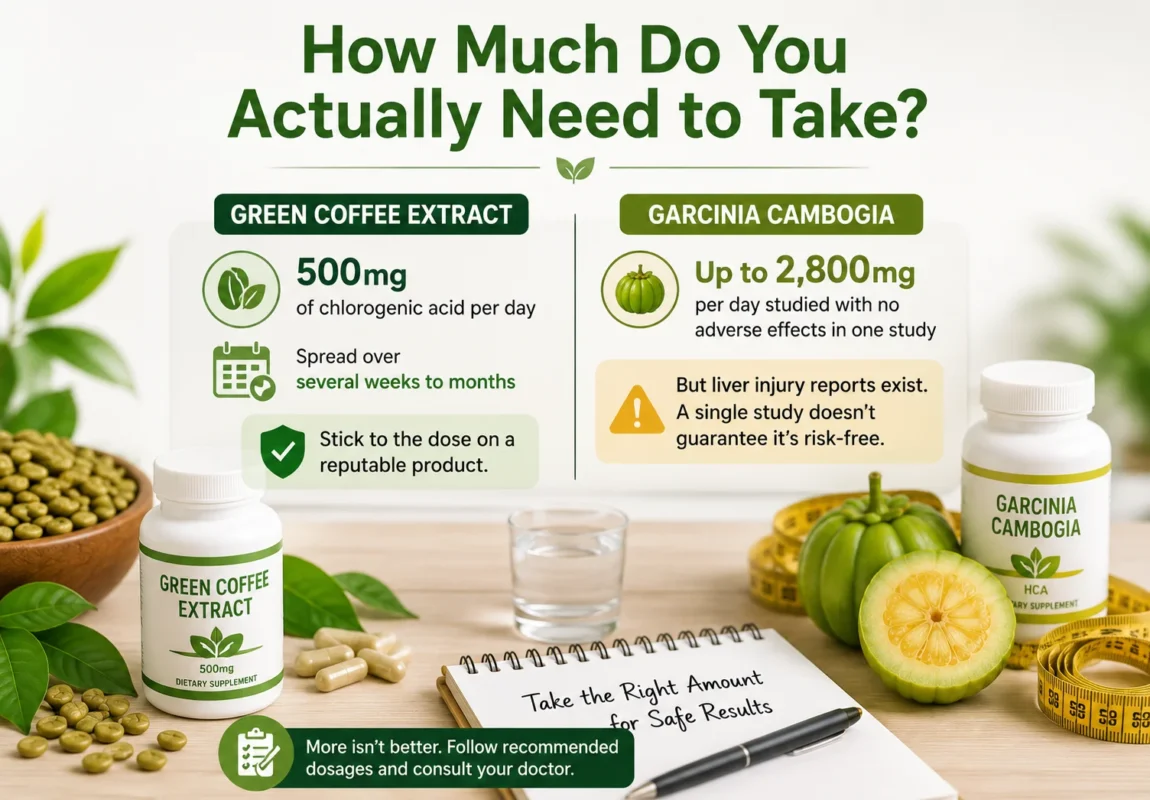
Research on green coffee extract mostly used doses around 500mg per day of chlorogenic acid, spread across a few weeks to a few months. Higher doses don’t automatically mean better results, and more isn’t always safer. Stick to the dose listed on a reputable product rather than assuming more will speed things up.
For garcinia cambogia, one study found no adverse effects at 2,800mg per day, which researchers suggested as a possible safe upper limit. But that single data point doesn’t erase the broader pattern of liver injury reports tied to garcinia products overall. A single reassuring study doesn’t outweigh a documented pattern of harm across many separate case reports.
How These Ingredients Usually Get Sold
You’ll rarely find pure green coffee extract or pure garcinia cambogia sold entirely alone. Most weight-management products combine several ingredients — often including caffeine, green tea extract, chromium, or other botanicals — into one formula. This makes it hard to know which ingredient in a blend caused any effect, good or bad. It also means checking the full label matters more than checking the front-of-box marketing claim.
Realistic Expectations and Timeline
Even the research showing genuine benefit for green coffee extract reported modest results: a few kilograms over several weeks, not dramatic transformation. Supplements work best as one small piece of a broader plan that includes diet and activity changes. Anyone expecting a pill alone to replace those changes will likely end up disappointed, regardless of which ingredient they choose.
Common Myths Worth Clearing Up
- “Natural means safe” — false, and garcinia cambogia is the clearest example in this entire category. It’s a natural plant extract with a documented pattern of causing liver injury in some users.
- “If a supplement is sold in stores, regulators must have proven it works” — not necessarily true in many markets, where dietary supplements face lighter pre-market testing requirements than medications.
- “More ingredients in a blend means better results” — not supported by the evidence. A longer ingredient list often means smaller individual doses of each ingredient, sometimes too small to match the doses actually tested in research.
The Takeaway
Green coffee extract and garcinia cambogia get marketed as if they’re interchangeable weight-loss shortcuts. They aren’t. One has modest but reasonably consistent evidence behind it and a favorable safety record. The other carries genuinely mixed evidence and a well-documented liver injury risk. Read labels carefully, watch for garcinia cambogia hiding in blended formulas, and talk to a doctor before adding either one to your routine — especially if you take other medications or manage an existing health condition.
Quick FAQ
How long before green coffee extract shows results?
Most studies measuring weight change ran for 4 to 12 weeks. Don’t expect rapid results within days.
Is garcinia cambogia safe in small amounts?
Even at lower doses, reported liver injury cases make it hard to call any amount fully risk-free. Discuss it with a doctor first, especially with existing health conditions.
Can I take green coffee extract if I already drink regular coffee?
Discuss your total caffeine intake with a doctor, since green coffee extract still contains caffeine unless labeled decaffeinated.
This article discusses supplement research for educational purposes and is not medical advice. Consult a healthcare provider before starting any weight-management supplement, particularly if you have liver conditions, take other medications, or are pregnant or breastfeeding.
