

Blog
Calcium Citrate for Menopause: The Bone-Health Supplement Guide Every Woman Over 45 Should Read

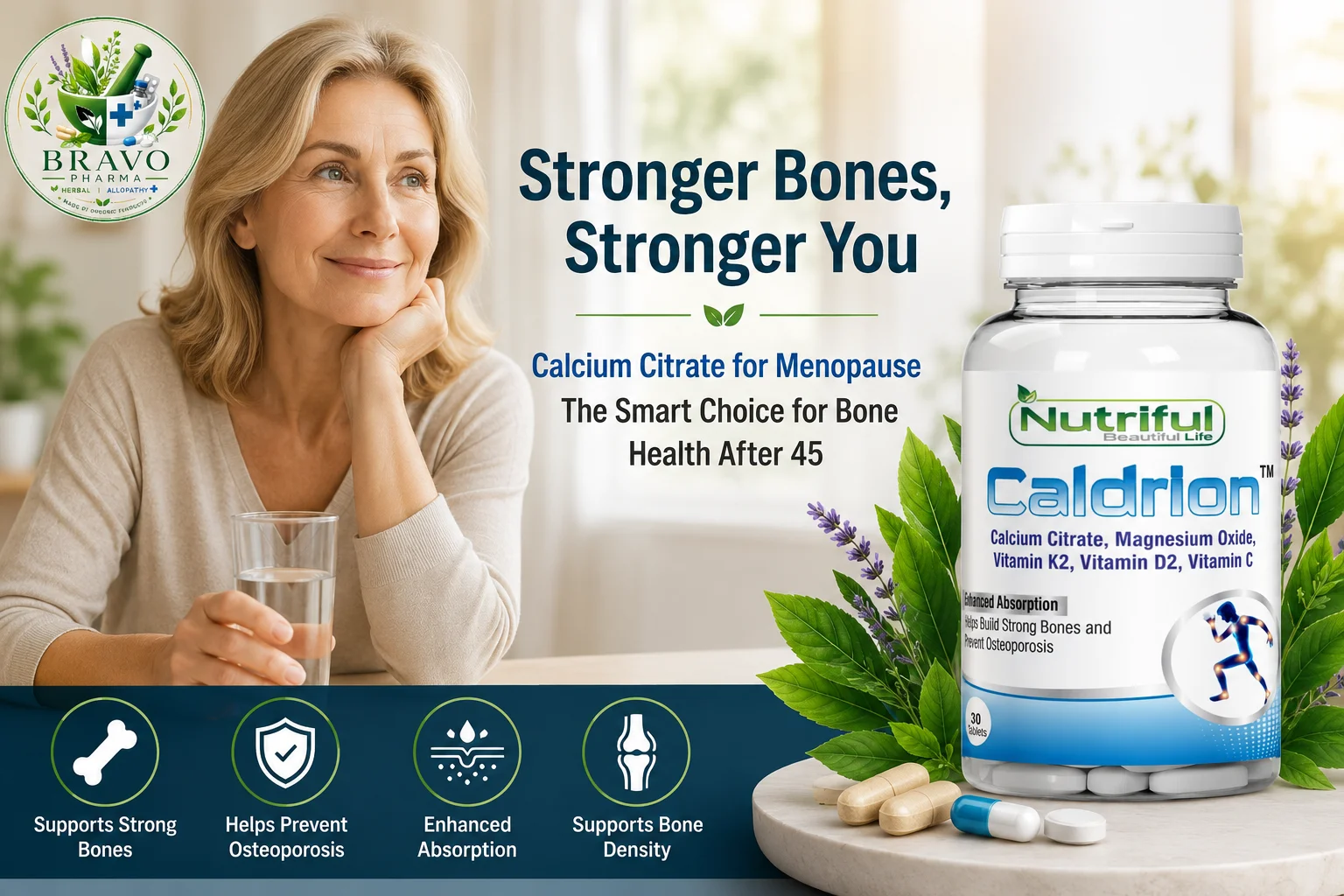
If you’ve noticed your knees ache a little more, or your doctor mentioned “bone density” at your last checkup, you’re not imagining things. Menopause changes how your body holds onto calcium, and most women aren’t told this until a bone scan reveals the damage already done. The encouraging part is that the right calcium, taken the right way, can meaningfully slow this process down.
Why Menopause Puts Your Bones at Risk
Estrogen does more than regulate your cycle — it actively protects bone tissue by slowing the natural breakdown of old bone cells. When estrogen levels fall during menopause, that protection disappears almost overnight. Research shows women can lose up to 20% of their bone density in the five to seven years following menopause, with the steepest decline happening in the first couple of years.
The frustrating part is that bone loss is silent. There’s no pain, no early warning sign — often the first indication is a fracture from a minor fall. That’s why bone-health experts recommend acting before symptoms appear, not after.
Calcium Citrate vs. Calcium Carbonate: What’s the Real Difference
Walk into any pharmacy and you’ll find two main forms of calcium: carbonate and citrate. They aren’t interchangeable, especially for menopausal women.
| Feature | Calcium Carbonate | Calcium Citrate |
| Elemental calcium content | ~40% | ~21% |
| Needs food to absorb | Yes | No |
| Absorption efficiency | Lower, especially with age | Roughly 24% higher |
| Common side effects | Bloating, constipation | Gentler on digestion |
| Best suited for | Younger adults with strong stomach acid | Women 40+, especially with low stomach acid |
As we age, stomach acid production naturally declines, which makes it harder to break down calcium carbonate properly. Calcium citrate can be absorbed on a full or empty stomach, and its absorption rate is meaningfully higher than that of calcium carbonate. This is one reason many women switch to citrate-based supplements once they hit their mid-40s, such as
This is one reason many women switch to citrate-based supplements once they hit their mid-40s, such as Nutriful Caldrion Calcium Citrate.
How Much Calcium Do You Actually Need
According to Mayo Clinic, adults aged 51 and older need between 1,000 and 1,200 mg of calcium daily, and total intake should not exceed 2,000 mg per day. That number should include both diet and supplements combined — not supplements alone.
A simple way to plan your intake:
- Estimate your average daily calcium from food (dairy, leafy greens, fortified products)
- Subtract that number from your target (1,000–1,200 mg)
- Fill the remaining gap with a supplement rather than guessing
Most women underestimate their dietary calcium and end up either under-supplementing or accidentally overshooting the safe upper limit — both of which carry risks. Pairing calcium with adequate vitamin D also matters, since vitamin D governs how much of that calcium your gut actually absorbs.
Signs Your Bones Need More Support
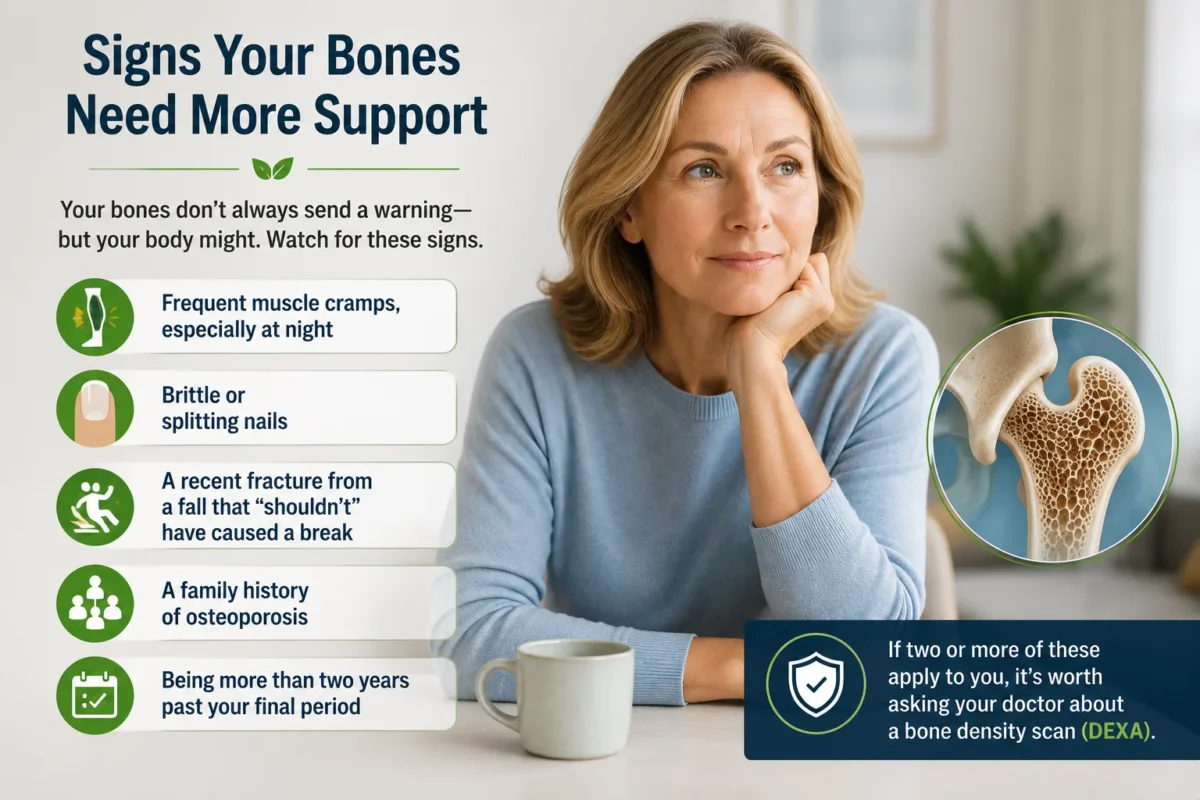
You won’t feel your bones getting weaker, but a few patterns are worth paying attention to:
- Frequent muscle cramps, especially at night
- Brittle or splitting nails
- A recent fracture from a fall that “shouldn’t” have caused a break
- A family history of osteoporosis
- Being more than two years past your final period
If two or more of these apply to you, it’s worth asking your doctor about a bone density scan (DEXA), which is painless and takes about 30 minutes.
Building a Bone-Protective Routine
Supplementation works best alongside a few supporting habits:
- Weight-bearing exercise — walking, light resistance training, or stair climbing signals your body to retain bone density.
- Limit alcohol — it interferes with your body’s ability to absorb both calcium and vitamin D.
- Don’t smoke — smoking accelerates bone loss independent of estrogen levels.
Take calcium consistently — a supplement like Caldrion works best when taken daily rather than sporadically, since bone remodeling is a continuous process, not a one-time fix.
- Recheck your levels periodically — especially if you’re also on other medications, since some interact with calcium absorption.
Frequently Asked Questions
Is calcium citrate better than calcium carbonate for menopausal women?
For most women over 40, yes. Calcium citrate doesn’t require stomach acid to break down, so it absorbs more reliably as digestion naturally slows with age.
Can I take calcium citrate on an empty stomach?
Yes. Unlike calcium carbonate, calcium citrate doesn’t need to be taken with food to be absorbed properly.
How long does it take to see results from calcium supplementation?
Bone remodeling is slow. Most studies measuring bone density changes look at 12–24 month windows, so consistency matters more than speed.
Can too much calcium be harmful?
Yes. Excess calcium can lead to hypercalcemia, which may affect the heart and contribute to kidney stones, which is why staying within the recommended daily range matters.
Do I still need calcium if I’m on hormone therapy?
Often yes — HRT helps preserve existing bone density, but it doesn’t replace the need for adequate dietary and supplemental calcium.
Conclusion
Menopause changes your body’s relationship with calcium whether you notice it or not. The good news is that the response is straightforward: choose a form your body can actually absorb, stay within safe daily limits, and pair it with simple lifestyle habits that support bone strength. A well-absorbed calcium citrate supplement, taken consistently, is one of the easiest changes you can make for long-term bone health.